Central Asia
Olympic Stadium
Background
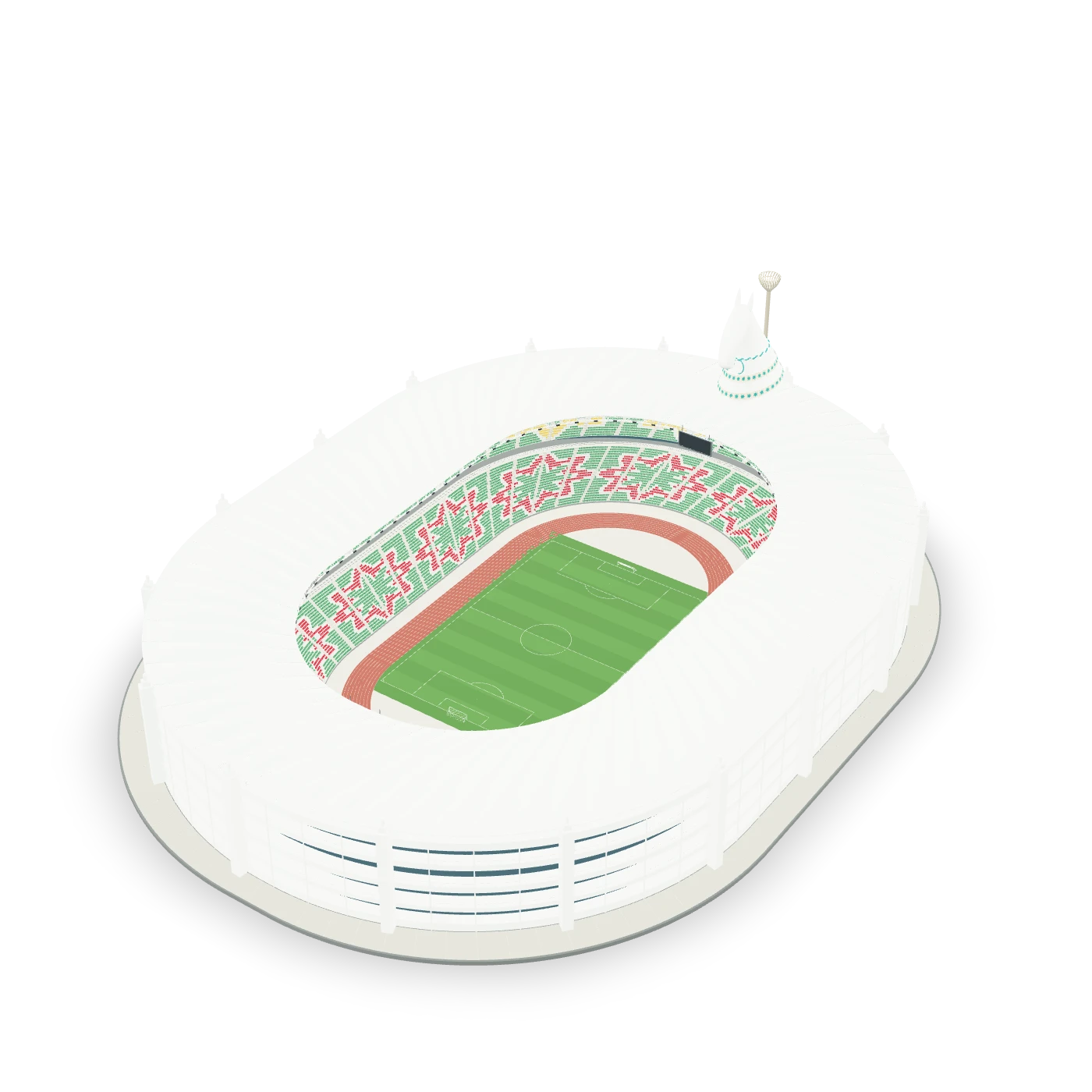
The present stadium stands on the site of the earlier Olympic Stadium, demolished in 2013. Construction ran in 2013–2017; the Turkish company Polimeks was the general contractor, and AFL Architects and Arup produced the design. The arena was built for the Asian Indoor and Martial Arts Games, held in Ashgabat on 17–27 September 2017.
The stands have two tiers and are fully covered by the roof; a construction report of 2016 mentions 16 large roof girders. The head of an Akhal-Teke horse is mounted above the north stand. Measured on 6 March 2017, it is 40.05 metres high, 37.69 metres long and 40.24 metres wide; according to the Turkmen side, Guinness World Records recognised it as the largest architectural horse symbol in the world. The bowl for the Games flame is raised together with the horse.
The stadium has a football pitch and an athletics track. The Turkmenistan national football team and FC Arkadag play selected matches here. The Olympic town's management describes the arena as a venue for international football and athletics competitions and for state-level sports festivals and cultural events.
Compare
Capacity, seatsNo. 2 of 10. 6,000 seats less than the leader.
- 1Bishkek ArenaBishkek51,000
- 2Olympic StadiumAshgabat45,000
- 3Pakhtakor StadiumTashkent34,000
- 3Bunyodkor StadiumTashkent34,000
- 5Astana ArenaAstana30,000
- 5National StadiumDushanbe30,000+
- 7Kopetdag StadiumAshgabat26,503
- 820-Letie Nezavisimosti StadiumKhujand25,000
- 9Central StadiumAlmaty23,804
- 10Markaziy StadiumNamangan21,913
Uzbekistan 3 · Turkmenistan 2 · Kazakhstan 2 · Tajikistan 2 · Kyrgyzstan 1
On the map
Artistic models based on photographs. Some details are simplified. The movement of the Astana Arena roof is sped up for clarity.