Central Asia
Bunyodkor Stadium
Background
The stadium replaced the MHSK Stadium, which was closed and dismantled in 2008. The client was the company Zeromax; after its bankruptcy the work slowed down and resumed in 2011. The German practice gmp designed the stadium, Werner Sobek did the structural engineering, the German firm Max Bögl started construction and the Austrian firm Oberhofer Stahlbau continued it in 2011. The complex opened on 28 September 2012 in the presence of President Islam Karimov; that day Bunyodkor and Pakhtakor drew a friendly 3:3.
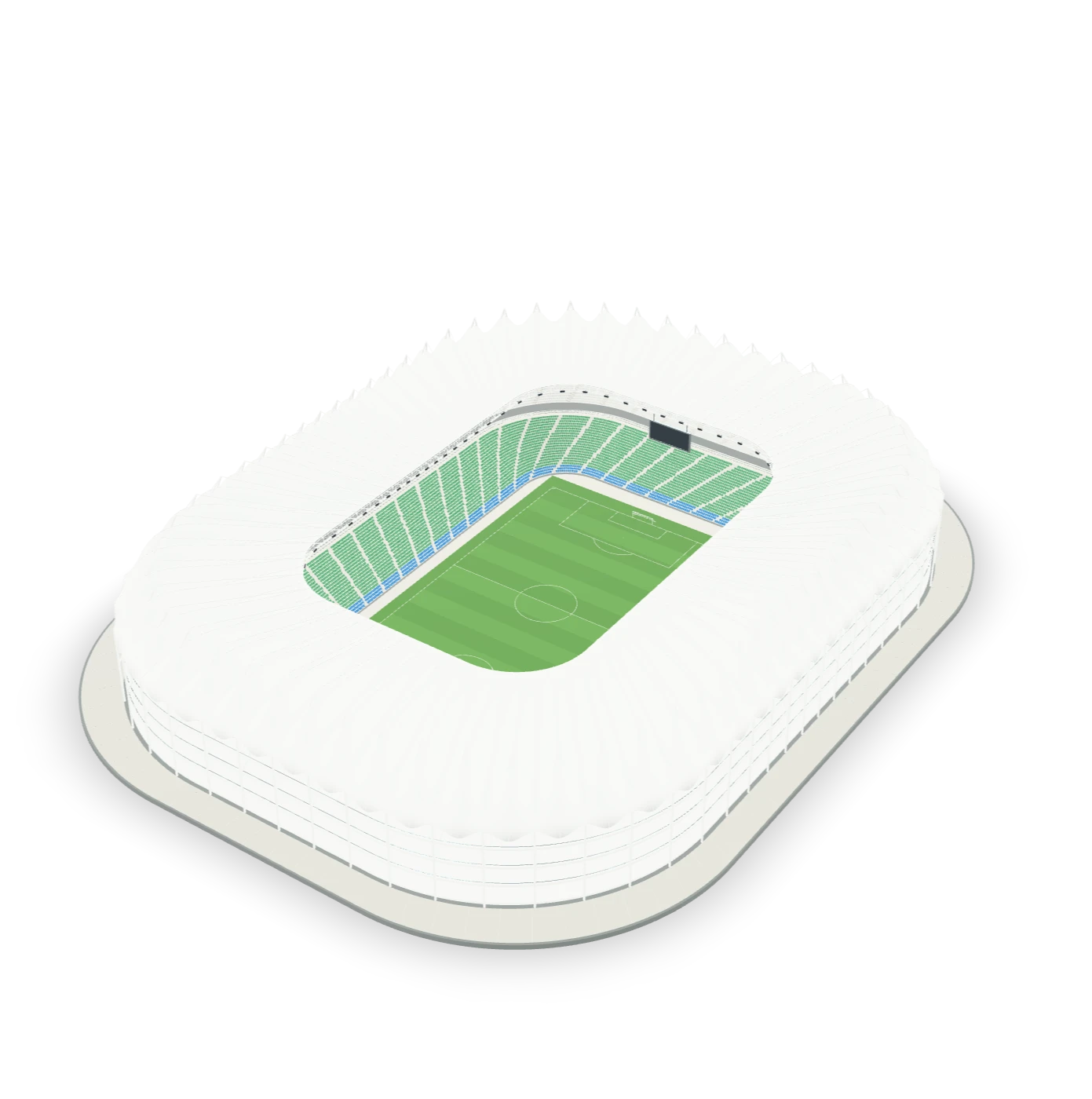
Werner Sobek describes it as a reinforced-concrete structure with a light membrane roof. The two-tier stadium measures about 220 × 180 metres in plan, and the upper tier is almost 22 metres above ground level. There is an underground car park beneath the stadium. The sports park also includes a three-storey sports boarding school for about 200 students with a swimming pool and a gymnasium.
The first official match was played on 26 March 2013, when Uzbekistan beat Lebanon 1:0 in qualifying for the 2014 World Cup. Since then it has been the national team's main home ground. On 11 June 2018 the Uzbekistan Football Association renamed the stadium Milliy. On 10 June 2025, after the match against Qatar, the team's qualification for the 2026 World Cup was celebrated here.
Compare
Capacity, seatsNo. 3 of 10. 17,000 seats less than the leader.
- 1Bishkek ArenaBishkek51,000
- 2Olympic StadiumAshgabat45,000
- 3Pakhtakor StadiumTashkent34,000
- 3Bunyodkor StadiumTashkent34,000
- 5Astana ArenaAstana30,000
- 5National StadiumDushanbe30,000+
- 7Kopetdag StadiumAshgabat26,503
- 820-Letie Nezavisimosti StadiumKhujand25,000
- 9Central StadiumAlmaty23,804
- 10Markaziy StadiumNamangan21,913
Uzbekistan 3 · Turkmenistan 2 · Kazakhstan 2 · Tajikistan 2 · Kyrgyzstan 1
On the map
Artistic models based on photographs. Some details are simplified. The movement of the Astana Arena roof is sped up for clarity.